How to split groceries with roommates.
Updated
There are four common ways. A shared grocery fund, where everyone puts in the same amount and one person shops. Separate shelves, where everyone buys their own food and only shares basics. Taking turns, where each person buys for the house in rotation. Or splitting every receipt.
A fund works best for roommates who eat together. Separate shelves work best when diets and schedules differ. Splitting every receipt is the most exact and the most work.
We Both gives the house one shared shopping list everyone adds to, and “Done shopping” turns the trip into one expense in the house’s shared ledger.

 Or scan with your iPhone camera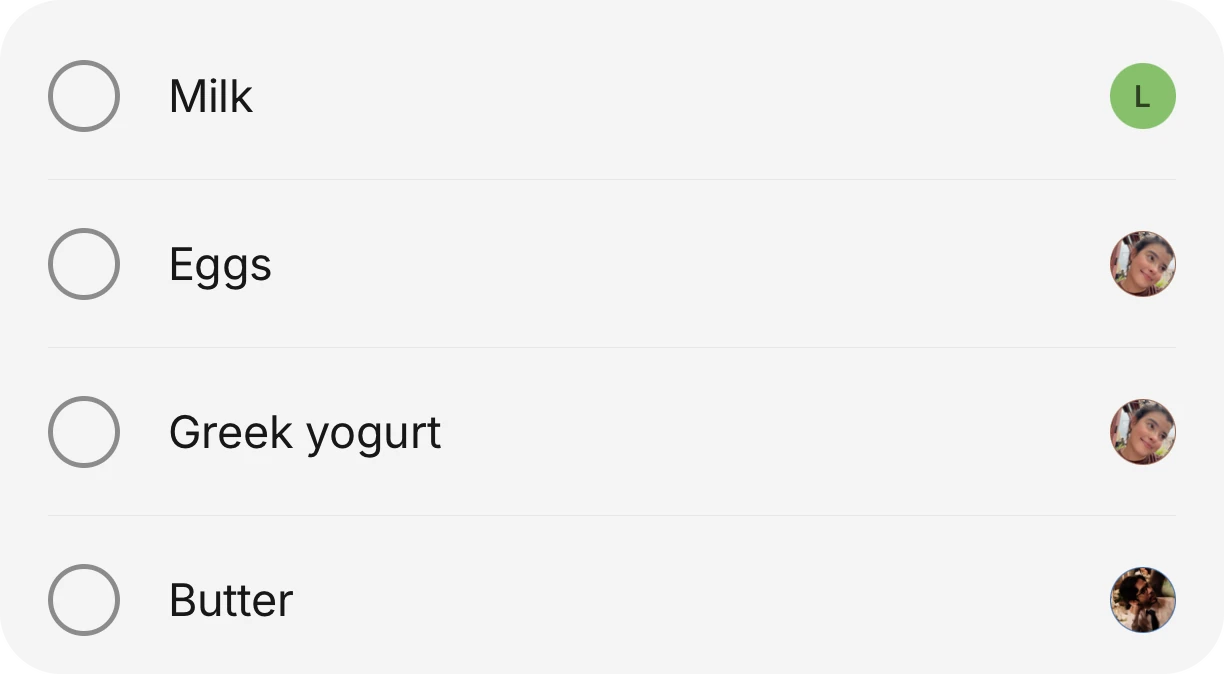
The four options, compared
| Option | How it works | Effort | Best for |
|---|---|---|---|
| Shared fund | Everyone pays the same into a pot each month. One card or account buys the food. | Low | Roommates who cook and eat together |
| Separate shelves | Everyone buys their own food. Only basics like oil, salt and cleaning supplies are shared. | Lowest | Different diets, schedules or budgets |
| Taking turns | One person shops each week or month and the role rotates. | Low | Close budgets and similar eating habits |
| Split each receipt | Someone pays, then everyone reimburses their share. | High | Uneven use that you want to settle to the dollar |
Shared fund: the simplest for most houses
Pick a monthly amount per person, based on what you actually spent last month. Everyone pays it in, and the shopper uses the fund. If the pot runs low, top it up. If there is money left, carry it over. You never have to reimburse anyone after a trip.
The weak spot is uneven use. If one person eats much more or drinks the oat milk that only they buy, agree up front on what goes in the shared pot and what each person buys on their own.
Separate shelves: fewer fights, more waste
Give everyone a cabinet and a fridge shelf. Share only the staples you all use, and take turns buying those. It avoids arguments about who ate what, but you lose the savings from cooking in bulk and each person tends to buy duplicates.
Whatever you pick, make three rules
- Write down what counts as shared and what does not (snacks, alcohol, special diets).
- Keep one list that everyone adds to, so nobody buys the same thing twice or forgets the last of the milk.
- Look at the total once a month. If the number drifts up, talk about it before it becomes a fight.
How We Both fits
In We Both, everyone in the house adds to one shared shopping list, and the list refreshes every few seconds on everyone’s phone while it is open. Each item on the list shows who added it, and a cart view helps while you shop. When you tap “Done shopping”, the trip becomes a single expense in the house’s ledger, with the person who logged it recorded.
To be clear about the limit: We Both does not split a receipt between people or track who owes whom. It fits houses that share one grocery pot. If you want to agree on shares by income first, our free calculator does that math, but the app itself keeps one ledger for the whole house.
Open the split-by-income calculator →Questions people ask
Is it fair to split groceries evenly between roommates?
It is fair when everyone eats about the same. If one person eats out often or has a different diet, use separate shelves for personal food and split only the shared staples.
How much should each roommate put in a grocery fund?
Add up what the house spent on groceries last month, divide by the number of people, and round up a little. Adjust after two or three months.
What is the easiest way to track shared grocery spending?
Use one shared list and one place that records every trip. A shared notes app or a shared spreadsheet works, and so does We Both.
Can We Both split a grocery bill between roommates?
No. We Both records each trip as one expense in the house’s shared ledger. It does not divide receipts or calculate who owes what.
Get the whole house on it.
Download it free, then invite everyone you live with. They see the same list, the same calendar and the same money.
Or scan with your iPhone camera